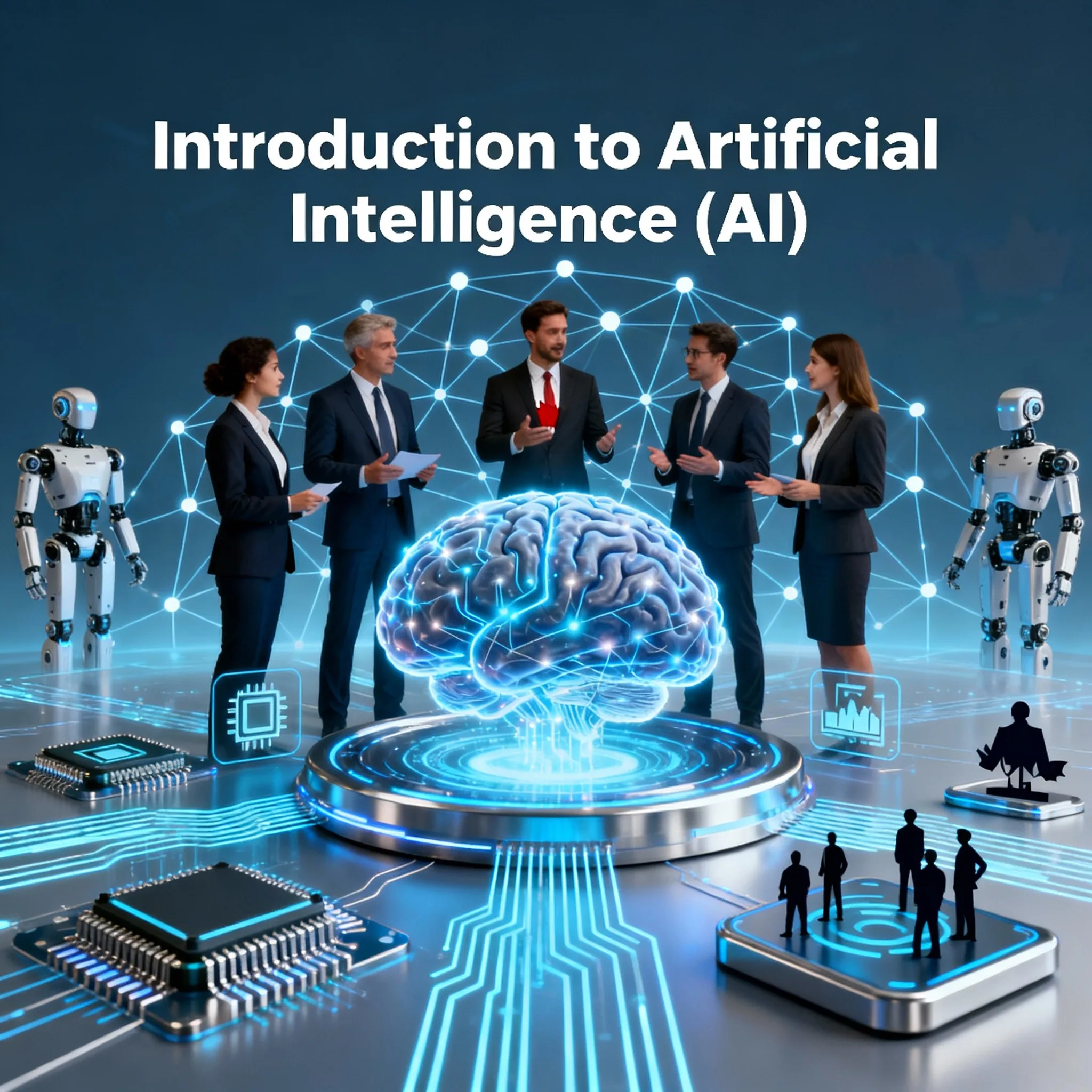
Artificial Intelligence, or AI, is basically about teaching machines to “think” in ways that feel a little human. It’s what powers the face recognition on your phone, helps Netflix suggest shows you’ll probably binge next, or even makes self-driving cars possible. At its core, AI is about solving problems, learning from experience, and making decisions, things we usually associate with human intelligence.
For students and professionals entering today’s digital world, AI isn’t just some futuristic idea; it’s already shaping how we live, work, and interact. Companies like All IT Solutions,are even helping businesses in Canada use AI-driven tools to improve marketing, automate tasks, and connect better with customers.
A Quick Look at AI’s History
The dream of building “thinking machines” has been around for centuries, but AI as a serious field of study started in the 20th century.
- In the 1940s and 1950s, when computers were first invented, scientists like Alan Turing asked the big question: “Can machines think?” Turing even came up with the famous Turing Test to see if a computer could act so human-like that people wouldn’t know the difference.
- In 1956, a group of researchers met at the Dartmouth Conference and officially gave this new science a name: Artificial Intelligence.
- The 1960s and 70s brought programs that could play games or solve math puzzles. Scientists also started working on “expert systems” that gave advice in fields like medicine.
- The 1980s were tough. Computers weren’t powerful enough yet, and excitement slowed down. This period is now called the AI Winter.
- In the 1990s, AI made a comeback. The big turning point was in 1997 when IBM’s Deep Blue beat world chess champion Garry Kasparov.
- From the 2000s onward, things exploded. Faster computers, massive amounts of data, and advanced algorithms gave us the AI we know today: Google Translate, Siri, self-driving cars, and even AI systems like ChatGPT that can write, chat, and brainstorm ideas.
What Are Intelligent Systems?
When we talk about “intelligent systems,” we mean machines or software that can sense what’s happening around them and respond intelligently. Think of it as tech that doesn’t just follow instructions, but adapts to situations.
Some real-life examples include self-driving cars that recognize traffic lights, factory robots that adjust to conditions, voice assistants like Alexa or Google Assistant, and medical software that helps doctors make diagnoses.
Types of Intelligent Systems
There are different ways to categorize intelligent systems, and one way is based on how smart they are:
- Narrow AI: This is what we use today. It’s good at specific tasks like recommending movies or transcribing speech, but it can’t do much outside of its specialty.
- General AI: A future goal, this would be AI as adaptable as humans, able to learn anything. We’re not there yet.
- Superintelligent AI: A concept where machines surpass human intelligence in every way. Some people find this exciting; others find it scary.
Another way to classify AI is by how it functions:
- Reactive Machines: Simple AIs that only respond to current situations. A chess program that reacts to the board is a good example.
- Limited Memory: These systems “remember” past data to make smarter decisions, like self-driving cars tracking nearby vehicles.
- Theory of Mind (future goal): An AI that understands emotions and social interactions.
- Self-Aware AI (future goal): The most advanced kind, where machines become self-aware. Still science fiction, at least for now.
The Key Components of AI
Behind every AI program, some building blocks make it work:
- Knowledge Base that stores information and rules.
- Inference Engine that uses logic to make decisions.
- Learning Component that improves with experience.
- Natural Language Processing (NLP) so machines can understand human language.
- Perception tools like vision or speech recognition.
- Action mechanisms that actually carry out decisions, like a chatbot responding or a robot moving.
The Foundations of AI
AI didn’t appear out of thin air; it’s built on the shoulders of several fields:
- Mathematics, which gives AI logic, probability, and statistics.
- Computer Science, which provides algorithms and programming.
- Neuroscience, which draws inspiration from how the brain works.
- Psychology and Cognitive Science which explain how humans learn and think.
- Linguistics, which helps AI systems understand language.
- Engineering, which builds the physical and digital systems AI runs on.
Sub-areas of AI
AI is a huge umbrella with many branches:
- Machine Learning (ML): Algorithms that learn from data.
- Natural Language Processing (NLP): Understanding and generating human language.
- Computer Vision: Teaching machines to analyze images and videos.
- Robotics: Giving robots AI-powered control to work in the real world.
- Expert Systems: Mimicking human experts using rule-based systems.
- Planning & Reasoning: Helping machines think logically about how to reach a goal.
- Speech Recognition: Converting spoken words into text.
Applications of AI
AI isn’t just an academic subject anymore; it’s everywhere:
- In healthcare, AI helps doctors detect diseases and discover new drugs.
- In business, chatbots, fraud detection systems, and recommendation engines are all powered by AI.
- In education, AI tools personalize learning and even help grade assignments.
- In transportation, self-driving cars and smart traffic systems are becoming reality.
- In entertainment, Netflix, YouTube, and video games all use AI.
- In finance, AI predicts stock trends, automates trading, and helps with credit scoring.
- In everyday life, we use Siri, Alexa, and Google Assistant without even thinking about it.
How All IT Solutions Connects With AI
While AI is often talked about in terms of robots or sci-fi, its real impact is much closer to home, especially in the world of business and digital growth. This is where we play a role.
Across Canada, we help companies use AI-driven tools for marketing automation, social media strategies, SEO, and customer engagement. Instead of relying only on traditional methods, businesses can now use AI to personalize ads, automate emails, or even predict customer behavior.
By blending human creativity with intelligent systems, we’re helping local businesses stay competitive in a world where technology moves fast.
Final Thoughts
Artificial Intelligence has grown from an idea in the 1950s to something that’s shaping almost every part of our lives today. It’s not just about futuristic robots; it’s in the apps we use daily, the businesses we buy from, and even the entertainment we consume.
For students and young professionals, learning about AI isn’t just “nice to know” anymore; it’s essential for the future. And for businesses, especially in a tech-driven country like Canada, working with teams like All It solutions can be the difference between staying ahead and falling behind.
AI is here to stay. The question is how we’ll use it, and how we’ll prepare for what comes next.